Being comfortable while diving is a relative term. For some, being comfortable means diving in warm water with great visibility and no current. For others it might mean having equipment that functions well and that fits well. Sometimes it is hard to control the environmental factors. However you can do a lot to make your dive more comfortable by making your equipment as comfortable as possible.
One of my students had all kinds of problems with the mouthpiece of the regulator she was using during the certification dives. The equipment problem almost prevented her from completing the certification. Eventually we were able to get a better fitting mouthpiece and she had no further equipment problems.
Recently I got an email from her letting me know that she is going to purchase a mouthpiece that she knows is comfortable and will be taking the mouthpiece on her upcoming dive vacation. She will use her own mouthpiece on the rental gear at the resort. I like the idea of being proactive in dealing with gear issues.
There are many things that one can do to make your gear more comfortable. For example, making sure that you have adequate exposure protection (to prevent sunburn, abrasions and stings). Another example is making sure that you can operate all the various releases, inflators etc. on your BCD. This is especially important when you are using a rental BCD. On your checkout dive at the resort, it is good idea to practice inflating, deflating, etc. without looking. You should be able to locate the low pressure hose, find the correct button and inflate/deflate without looking. You should be able to find and use any air releases on the lower back of the BCD (if so equipped).
Being familiar with your gear, and making sure that everything fits and feels good on you will go a long way to making you more comfortable in the water.
Monday, October 31, 2005


Friday, October 28, 2005
Equalize early and often
As most divers know, equalizing early and often will prevent problems and "squeezes". If you wait to equalize until you experience discomfort, then you have waited too long. You should be equalizing - gently - as often as possible on your descent. Some agencies teach that one should equalize every meter / 3 feet or so. Personally I think that one should equalize a lot more often than that.
The key issue is that the pressure change is huge in the first 10 meters / 33 feet of the dive (I will not delve into the theory now, but will do so in a later post). Therefore the pressure difference in the inner and outer can be substantial, even at relatively shallow depths. It is critical that you equalize the pressures before injury occurs to the delicate structures in your ear.
Please see this excellent tutorial by Edmond Kay, M.D. for more indepth information on equalization techniques and theory.
The key issue is that the pressure change is huge in the first 10 meters / 33 feet of the dive (I will not delve into the theory now, but will do so in a later post). Therefore the pressure difference in the inner and outer can be substantial, even at relatively shallow depths. It is critical that you equalize the pressures before injury occurs to the delicate structures in your ear.
Please see this excellent tutorial by Edmond Kay, M.D. for more indepth information on equalization techniques and theory.
Tuesday, October 25, 2005
Keep sharpening the saw
A few years ago I read a great book by author Stephen Covey called The 7 Habits of Highly Effective People. Many people are probably familiar with Covey and this book. The habit of “Sharpening the Saw” is particularly applicable to SCUBA diving. In terms of sharpening the Saw the author makes the case that to be effective in your field you should keep your skills current and keep developing your knowledge base and abilities. In other words, never rest on your laurels.
Unlike many other hobbies and pastime activities, SCUBA diving requires one to keep up with new developments and equipment. As an instructor, you might have guessed that I would be beating the drum of continuing education. At the end of every open water class that we teach we always mention continuing education and encourage the students to sign up for more classes. We do this for a number of reasons (no, it is not just a money making ploy). The reason I do it is because I want people to become passionate about diving and derive as much pleasure from diving as I do.
There is research that indicates that people who complete continuing education classes and own their own equipment keep diving longer and are safer divers - a very obvious but important conclusion.
In my case, I continued to take classes after my open water class because that kept me diving and because I actually enjoy learning new things. Sometimes, taking a class was the only way I was able to dive in winter (ok, so it was only in a pool, but I still got wet).
From my observation, it would seem to me that less than twenty percent of the divers that I encounter end up taking the advanced open water classes. Even a smaller percentage goes on to take the rescue class. From my personal experience, I would say that every diver should complete at least the advanced and rescue classes. The rescue class was one of those classes that proved pivotal in my dive training. Once I completed the rescue class I felt much more comfortable in the water and knew that I could help myself and others if I got into trouble. The great thing about the rescue class is that you practice various scenarios for rescuing others.
In some of my previous posts I wrote about safety stops and that I like to practice various skills on the safety stop, like mask clears, hovering, regulator recovery etc. A responsible diver will always keep sharpening the saw of their skills and knowledge.
Unlike many other hobbies and pastime activities, SCUBA diving requires one to keep up with new developments and equipment. As an instructor, you might have guessed that I would be beating the drum of continuing education. At the end of every open water class that we teach we always mention continuing education and encourage the students to sign up for more classes. We do this for a number of reasons (no, it is not just a money making ploy). The reason I do it is because I want people to become passionate about diving and derive as much pleasure from diving as I do.
There is research that indicates that people who complete continuing education classes and own their own equipment keep diving longer and are safer divers - a very obvious but important conclusion.
In my case, I continued to take classes after my open water class because that kept me diving and because I actually enjoy learning new things. Sometimes, taking a class was the only way I was able to dive in winter (ok, so it was only in a pool, but I still got wet).
From my observation, it would seem to me that less than twenty percent of the divers that I encounter end up taking the advanced open water classes. Even a smaller percentage goes on to take the rescue class. From my personal experience, I would say that every diver should complete at least the advanced and rescue classes. The rescue class was one of those classes that proved pivotal in my dive training. Once I completed the rescue class I felt much more comfortable in the water and knew that I could help myself and others if I got into trouble. The great thing about the rescue class is that you practice various scenarios for rescuing others.
In some of my previous posts I wrote about safety stops and that I like to practice various skills on the safety stop, like mask clears, hovering, regulator recovery etc. A responsible diver will always keep sharpening the saw of their skills and knowledge.
Monday, October 24, 2005
Is that a shark in the water?
One of the blogs that I like to read on a regular basis is DiveSouthAfrica. For the last few days there have been many posts in the Dive South Africa blog that mentioned shark attacks of various types. It might just be co-incidence, but it seems that there is an up tick in the number of attacks. As many might know, South Africa has a long coastline with a very rich diversity of marine life.
A while ago I wrote about how I dislike the practice of chumming to lure sharks to dive cages for the purposes of photography. Cage diving is very popular in South Africa and generates a good income for the various operators who gear their dives to tourists and thrill seekers. These operators cater to divers and non-divers alike since many of them will not require SCUBA certification for the cage dives. One of the shark attacks mentioned in the Dive South Africa blog happened close to where cage diving and chumming occur.
As I wrote previously, I do not think that chumming can have a good outcome. Personally, I believe that if we are to enjoy marine life we should interfere as little as possible with the way the animals behave naturally. If that means that we have to wait a little longer for a shark to appear then so be it.
Recently, there was an interesting documentary on television about Shark Mountain in the Cocos Islands. This particular site has rich diversity of marine life with an abundance of various shark species. It was fascinating to see the documentary makers prepare for their dives, and how they dove amongst literally hundreds of hammerheads.
One very interesting scene in the documentary showed the mating behavior of white tipped sharks. According to the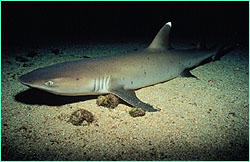 narrator, it was the first time in twenty years of diving that he was able to see the mating ritual from start to finish. It was very violent and the female was left bleeding and exhausted. For a while, I was concerned that the males would kill the female in the mating ritual. Apparently, these sharks have the most violent mating behavior of the shark family. It is surprising that the species manages to survive such violent social behavior. Most interesting though was the documentary maker was not in a cage and was probably within 20 yards/meters or so from the sharks.
I guess the point of this post is to contrast various ways in which we can interact with the top predator in the sea. It might mean that we have to travel further, spend more time researching and waiting, but in my opinion it is safer to observe the sharks in their natural environment without introducing any external influences like chumming. However, having said all that, I would not like to encounter a great white face to face without the security of a cage. I guess most other species I would not have too much trouble with, but the great whites still get my adrenaline pumping!
PS: 10/26/05 noticed an interesting link on Divester about a shark video in South Africa. Worth watching. Thanks Bill.
A while ago I wrote about how I dislike the practice of chumming to lure sharks to dive cages for the purposes of photography. Cage diving is very popular in South Africa and generates a good income for the various operators who gear their dives to tourists and thrill seekers. These operators cater to divers and non-divers alike since many of them will not require SCUBA certification for the cage dives. One of the shark attacks mentioned in the Dive South Africa blog happened close to where cage diving and chumming occur.
As I wrote previously, I do not think that chumming can have a good outcome. Personally, I believe that if we are to enjoy marine life we should interfere as little as possible with the way the animals behave naturally. If that means that we have to wait a little longer for a shark to appear then so be it.
Recently, there was an interesting documentary on television about Shark Mountain in the Cocos Islands. This particular site has rich diversity of marine life with an abundance of various shark species. It was fascinating to see the documentary makers prepare for their dives, and how they dove amongst literally hundreds of hammerheads.
One very interesting scene in the documentary showed the mating behavior of white tipped sharks. According to the
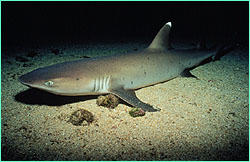 narrator, it was the first time in twenty years of diving that he was able to see the mating ritual from start to finish. It was very violent and the female was left bleeding and exhausted. For a while, I was concerned that the males would kill the female in the mating ritual. Apparently, these sharks have the most violent mating behavior of the shark family. It is surprising that the species manages to survive such violent social behavior. Most interesting though was the documentary maker was not in a cage and was probably within 20 yards/meters or so from the sharks.
I guess the point of this post is to contrast various ways in which we can interact with the top predator in the sea. It might mean that we have to travel further, spend more time researching and waiting, but in my opinion it is safer to observe the sharks in their natural environment without introducing any external influences like chumming. However, having said all that, I would not like to encounter a great white face to face without the security of a cage. I guess most other species I would not have too much trouble with, but the great whites still get my adrenaline pumping!
PS: 10/26/05 noticed an interesting link on Divester about a shark video in South Africa. Worth watching. Thanks Bill.
Wednesday, October 19, 2005
There must be a better way
It is hard to understand why it is still necessary and permissible to pump vast quantities of sewage (raw and treated) into the world's oceans. Yes, I know that the amount of sewage pumped into the sea is very small compared to the total volume of sea water, that there have been studies that claim that it is a safe practice, that it is economically necessary, blah, blah, blah. Yes, I know and understand the arguments in favor of dumping sewage into our oceans.
However, I must say I find the thought of diving in sewage (no matter how diluted or treated) to be repulsive. Yes, I know that the fish do their thing in the sea. I am ok with that. I am not ok, however, with introducing our waste into the oceans, when there are better ways of treating and processing sewage.
The following appeared in an article on CDNN (http://www.cdnn.info/news/eco/e051017.html) - originally from the Bradenton Herald.
As a society, we should display the moral integrity and courage to make the difficult decisions necessary to be good stewards of the natural resources that have been entrusted to us.
However, I must say I find the thought of diving in sewage (no matter how diluted or treated) to be repulsive. Yes, I know that the fish do their thing in the sea. I am ok with that. I am not ok, however, with introducing our waste into the oceans, when there are better ways of treating and processing sewage.
The following appeared in an article on CDNN (http://www.cdnn.info/news/eco/e051017.html) - originally from the Bradenton Herald.
BOYNTON BEACH, Florida (17 Oct 2005) -- State environmental regulators are investigating a pump that's dumping treated sewage into the Atlantic Ocean after recreational scuba divers said it was killing a coral reef.I am not a scientist, marine biologist or an activist. I am just an average guy who loves to dive and help other people dive. It bothers me that we still need to dump sewage into the oceans when there are so many other options available. Why must we harm the oceans just because it is cheaper to do it that way?
The group, Palm Beach County Reef Rescue, says a pipe from the South Central Regional Wastewater Treatment Plant is spewing nitrogen-rich sewage that's fueling algae blooms. The algae are fouling the Gulf Stream Reef, a popular diving spot off Boynton Beach a mile and a half away from the pipe, the divers say.
"It's clear-cut," said Reef Rescue Director Ed Tichenor, a former New Jersey environmental consultant for private industry. "There are areas of (the reef) that look like a parking lot now."
As a society, we should display the moral integrity and courage to make the difficult decisions necessary to be good stewards of the natural resources that have been entrusted to us.
Tuesday, October 18, 2005
Equipment - lights, camera, action
 A while ago I wrote about my friend the Navigating Phenom (NP) who is an avid underwater videographer. NP has gathered quite the impressive collection of video equipment. Not only has he become a good photographer, he has also learned a great deal about marine life. What NP does is produce very nice looking short movies of the various dives that he does. When he is editing the footage he will make annotations about what the various species of marine animals are that he happens to be filming.
NP says that the key to capturing great footage and pictures is to be very patient and to know and understand the species that you are filming. If you know their behavior you will know where to look and what to expect. Many divers invest in fish identification books/slates that will help identify the various species you might encounter.
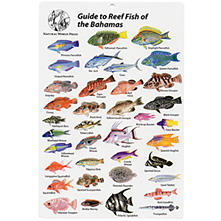
To get started in underwater photography, it might be a good idea to take an underwater photography class. You will learn many skills that will be useful in capturing excellent shots. The other class that might be useful is to take a buoyancy control class. This will help you develop pinpoint buoyancy control.
A good camera, housing, good lights and patience will make a huge difference to your enjoyment of the marine world.
After reading Willy's post in Divester.com I was reminded that a good site that you might find interesting for indepth camera information and reviews is Wetpixel.
Friday, October 14, 2005
Equipment - Fins
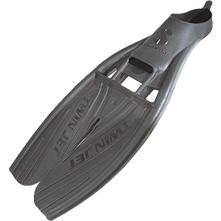
There are many different types of fins on the market. The choice that you make will be influenced by a number of factors including, the type of diving that you will be doing, how much you want to spend and whether you have any physical limitations.
Type of diving: if you will be diving in warm tropical waters then you would probably want to select a full foot fin. Cold water divers prefer to wear booties to keep their feet warm and generally use open heeled fins with the booties. If you are going to be doing both cold and warm water diving, then a good compromise would be to select an open heeled pair of fins since you use can them in both cold and warm water.
Cost: generally there is a relationship between the cost of the fins and how well they perform. The newer technology fins have undergone some very interesting changes. For example Scubapro markets split fins that look like they should not work, but work very well. Most manufacturers have a line of fins that include some kind of split fin/channel technology. The idea is that the split in the fins (or channels) help reduce the water pressure and resistance, yet allow you to kick efficiently. I do not want to delve too much into the theory of how they work, suffice to say that split fins have my hearty recommendation.
Physical limitations: If your knees have been injured due to a sports injury or some kind of accident etc. you certainly want to be careful in selecting the type of fins that you dive with. Fins make a huge difference to your comfort in the water. The newer, more efficient fins put less stress on your knees and allow you to kick more efficiently.
Consult your local dive store (LDS) about your specific fin choice, especially if you have some kind of physical limitation. Finding a good fit is important so that you can prevent or reduce cramping and excessive fatigue. Your LDS will be able to help you find a well fitting pair of fins.
Willy Volk from http://www.divester.com/ wrote an interesting post on open heeled fins versus full foot fins that include many links to excellent articles for more indepth research. See Willie's article here. Thanks Willie.
Wednesday, October 12, 2005
Equipment - Regulators
This is not going to be an exhaustive discussion of regulators. Suffice to say that there are many excellent models on the market from great manufacturers that work really well. However for the beginning diver there are important questions to answer before you decide on a specific make and model.
The first criterion that I would look at is the type of diving you will be doing. If you will be diving in warm tropical water, then you would most likely be selecting a different regulator from the person who will be diving in mostly cold water. In regard to cold water, one should select a regulator that is environmentally sealed. What this means is that very cold water will not (should not) cause a free flow.
The second criterion that I would evaluate is the mass (weight) of the actual second stage. If you are prone to jaw fatigue you would want to select a second stage that is as light as possible. Many of the newer second stages are made from a durable lightweight plastic material that performs very well.
Another factor to consider is whether there are additional ports available on the first stage. Additional ports will allow you add more hoses later on if you need. For example you might want to dive with a drysuit etc.
Alternate air sources (octopus) have to be clearly visible and are normally yellow. Most divers usually select an octopus that is compact and can be used in the up or down position. This will become clear to you when you start practicing donating an air source to your buddy. When you hand the octopus to your buddy, you don't want to waste time making sure that it is in the upright position. It should work in any position. If you will be diving with an integrated air source on your BCD, please see my previous post about BCD’s.
If you are a large framed person or tend to breathe very hard, you might want to determine if the regulator will be able to supply you the amount of air that you need. The higher performing regulators are very hard to "over breathe". This means that even if you do a strenuous and/or deep dive, the regulator will still be able to supply you all air that you need.
With regulators, you typically get what you pay for. The higher priced regulators generally perform to higher standards and allow one to do more advanced types of diving. However, most current regulators from reputable manufacturers perform very well for the recreational diver.
I am not going to make a specific recommendation about a manufacturer or model. I think it is best that you determine what works best for you with the help of your local dive store (LDS). In fact I think it is important that you have some kind of relationship with the store, since you need to have your regulator serviced every year. Additionally, most good stores will allow you to try out various models in the pool if you are not sure of what works best for you. Don't feel you need to make a decision and there is no going back. Make sure that the regulator you select is comfortable, performs beyond the level of diving that you will be doing and that you have it serviced regularly (I know I have said that twice now - but you know how it is with instructors...)
The first criterion that I would look at is the type of diving you will be doing. If you will be diving in warm tropical water, then you would most likely be selecting a different regulator from the person who will be diving in mostly cold water. In regard to cold water, one should select a regulator that is environmentally sealed. What this means is that very cold water will not (should not) cause a free flow.
The second criterion that I would evaluate is the mass (weight) of the actual second stage. If you are prone to jaw fatigue you would want to select a second stage that is as light as possible. Many of the newer second stages are made from a durable lightweight plastic material that performs very well.
Another factor to consider is whether there are additional ports available on the first stage. Additional ports will allow you add more hoses later on if you need. For example you might want to dive with a drysuit etc.
Alternate air sources (octopus) have to be clearly visible and are normally yellow. Most divers usually select an octopus that is compact and can be used in the up or down position. This will become clear to you when you start practicing donating an air source to your buddy. When you hand the octopus to your buddy, you don't want to waste time making sure that it is in the upright position. It should work in any position. If you will be diving with an integrated air source on your BCD, please see my previous post about BCD’s.
If you are a large framed person or tend to breathe very hard, you might want to determine if the regulator will be able to supply you the amount of air that you need. The higher performing regulators are very hard to "over breathe". This means that even if you do a strenuous and/or deep dive, the regulator will still be able to supply you all air that you need.
With regulators, you typically get what you pay for. The higher priced regulators generally perform to higher standards and allow one to do more advanced types of diving. However, most current regulators from reputable manufacturers perform very well for the recreational diver.
I am not going to make a specific recommendation about a manufacturer or model. I think it is best that you determine what works best for you with the help of your local dive store (LDS). In fact I think it is important that you have some kind of relationship with the store, since you need to have your regulator serviced every year. Additionally, most good stores will allow you to try out various models in the pool if you are not sure of what works best for you. Don't feel you need to make a decision and there is no going back. Make sure that the regulator you select is comfortable, performs beyond the level of diving that you will be doing and that you have it serviced regularly (I know I have said that twice now - but you know how it is with instructors...)
Sunday, October 09, 2005
Equipment - useful items to carry
This post is a continuation of the previous discussions on BCD's in the sense that I will be discussing items that you could carry in the BCD pockets.
Signaling devices: It is a good idea for every diver to carry at least one signaling device. Some signaling devices that divers carry are whistles, mirrors, "safety sausage", lights, air horns, tank bangers and so on. Signaling devices can used to alert a boat at the surface to pick you up if you happen to drift away from the boat or surface a distance away from where the boat is. A safety sausage is an inflatable device that you can inflate using a regulator. They are typically around 4 to 6 feet tall and are either bright yellow, red or a marmalade color. At night you use your dive light and illuminate the inside of the safety sausage.
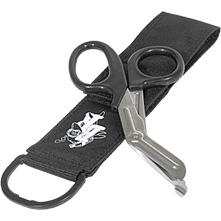
Knives, EMT shears: There are many different kinds of dive knives available. The type that I would recommend are made from titanium and do not corrode due to salt water immersion. Knives come in various styles. Some have rounded blade tips and some have sharp blade tips. It is a personal choice, but most people recommend a rounded tip on the blade to prevent accidental punctures of your gear etc. Some people have the mistaken idea that a knife can be used to fend off an attack by a marine animal and therefore choose a sharp tipped blade. The primary purpose of a dive knife is to be able to free yourself from underwater entanglements like fishing line, rope, etc. An alternative style of knife is a small knife that is sold with the BCD. The knife fits into a sheath in the shoulder harness. The advantage of these BCD included knives is that they are small, easy to carry and out of the way.
Some divers (myself included) like to carry a knife and a pair of EMT shears. The shears work differently to a knife in that you can easily cut through something using only one hand. Personally I like to carry my knife in my BCD pocket and my shears on the front of my BCD close to my left shoulder. The advantage of carrying two cutting devices in different places is that you can always reach one of them if you become stuck somewhere.
Some divers like to carry their knives on their left or right calves. I don't have a problem with this except that dive knives are the one article that is most often lost by divers, because if you are not careful, the blade can easily detach itself from the sheath and you will have to stop in at the local dive store to purchase a brand new shiny knife.
Signaling devices: It is a good idea for every diver to carry at least one signaling device. Some signaling devices that divers carry are whistles, mirrors, "safety sausage", lights, air horns, tank bangers and so on. Signaling devices can used to alert a boat at the surface to pick you up if you happen to drift away from the boat or surface a distance away from where the boat is. A safety sausage is an inflatable device that you can inflate using a regulator. They are typically around 4 to 6 feet tall and are either bright yellow, red or a marmalade color. At night you use your dive light and illuminate the inside of the safety sausage.

Knives, EMT shears: There are many different kinds of dive knives available. The type that I would recommend are made from titanium and do not corrode due to salt water immersion. Knives come in various styles. Some have rounded blade tips and some have sharp blade tips. It is a personal choice, but most people recommend a rounded tip on the blade to prevent accidental punctures of your gear etc. Some people have the mistaken idea that a knife can be used to fend off an attack by a marine animal and therefore choose a sharp tipped blade. The primary purpose of a dive knife is to be able to free yourself from underwater entanglements like fishing line, rope, etc. An alternative style of knife is a small knife that is sold with the BCD. The knife fits into a sheath in the shoulder harness. The advantage of these BCD included knives is that they are small, easy to carry and out of the way.
Some divers (myself included) like to carry a knife and a pair of EMT shears. The shears work differently to a knife in that you can easily cut through something using only one hand. Personally I like to carry my knife in my BCD pocket and my shears on the front of my BCD close to my left shoulder. The advantage of carrying two cutting devices in different places is that you can always reach one of them if you become stuck somewhere.
Some divers like to carry their knives on their left or right calves. I don't have a problem with this except that dive knives are the one article that is most often lost by divers, because if you are not careful, the blade can easily detach itself from the sheath and you will have to stop in at the local dive store to purchase a brand new shiny knife.
Saturday, October 08, 2005
Equipment - BCD part III
This will probably be the final segment on the continuing discussion on selecting of BCD's for the beginning diver.
Cummberbund / Cumberbund: Most current BCD's on the market have a sash like waistband that generally goes around the stomach of the diver and has velcro fasteners to secure it in place. The purpose of the cummerbund/cumberund is to keep the BCD in place and to prevent lateral movement.
It is important to remember that as you descent in the water, the water pressure will cause your wetsuit material to compress and you might find that the cumberbund might be not as tight at depth as at the surface. Do not overtighten the cumberbund fit when donning your gear. The cumberbund should fit snug around your stomach, but should not be so tight that you have trouble breathing or moving.
There are some designs that rely on buckles instead of velcro fasteners. I have both system on various BCD's that I own. I don't have a strong preference for either system, but if I had to make a choice, then I guess the buckle system feels a little more secure to me. However for the beginning diver, a velcro system works very well and it easy to use.
Releases: There are various styles of releases on BCD's. The primary purpose of the releases is to enable the diver to doff (take off) the equipment quickly and safely. Releases will be found on stomach belt, sternum belts and on the shoulder harnesses. The purpose of the various belts is to keep the BCD securely fitted to the diver. When choosing a BCD, try to select one that has a sternum belt as well (some don't).
There are differences in the way the releases operate (between the different manufacturers). Select a style that you find easy to operate. If you will be using gloves with the type of diving that you do, use the gloves in the store to see if you can operate the releases with gloves on.
Safety tip: always make sure you know where the releases are on your buddy's gear and that you know how they operate. You might have to assist your buddy in the case of an emergency and it is vital to know how to quickly locate and use the releases on his/her gear.
Cummberbund / Cumberbund: Most current BCD's on the market have a sash like waistband that generally goes around the stomach of the diver and has velcro fasteners to secure it in place. The purpose of the cummerbund/cumberund is to keep the BCD in place and to prevent lateral movement.
It is important to remember that as you descent in the water, the water pressure will cause your wetsuit material to compress and you might find that the cumberbund might be not as tight at depth as at the surface. Do not overtighten the cumberbund fit when donning your gear. The cumberbund should fit snug around your stomach, but should not be so tight that you have trouble breathing or moving.
There are some designs that rely on buckles instead of velcro fasteners. I have both system on various BCD's that I own. I don't have a strong preference for either system, but if I had to make a choice, then I guess the buckle system feels a little more secure to me. However for the beginning diver, a velcro system works very well and it easy to use.
Releases: There are various styles of releases on BCD's. The primary purpose of the releases is to enable the diver to doff (take off) the equipment quickly and safely. Releases will be found on stomach belt, sternum belts and on the shoulder harnesses. The purpose of the various belts is to keep the BCD securely fitted to the diver. When choosing a BCD, try to select one that has a sternum belt as well (some don't).
There are differences in the way the releases operate (between the different manufacturers). Select a style that you find easy to operate. If you will be using gloves with the type of diving that you do, use the gloves in the store to see if you can operate the releases with gloves on.
Safety tip: always make sure you know where the releases are on your buddy's gear and that you know how they operate. You might have to assist your buddy in the case of an emergency and it is vital to know how to quickly locate and use the releases on his/her gear.
Friday, October 07, 2005
Equipment - BCD part II
This is a continuation of the previous post on some pointers to selecting a BCD for the beginning diver.
Integrated Air: Some of the newer BCD's have an innovative feature that incorporates the alternate air source into the low pressure inflator hose system. The major advantage of this system is that you have one less hose in your regulator setup and don't need a separate alternate air source (also called an octopus). The one thing to remember about the integrated air systems is that if you have to donate an air source to a buddy, you would donate your primary regulator to the buddy and you would then breathe from the integrated air regulator. This is different from the traditional systems where you would keep the primary regulator and donate the alternate regulator (octopus) to the buddy needing air. For a beginning diver, either system has both pros and cons, but if you can afford the additional expense of an integrated system, it probably is beneficial since you have one less hose to worry about.
Pockets: Personally I like to have adequate pockets on BCD's. Sometimes I feel that I don't have enough pocket space for all the things that I like to carry (instructors are required to carry additional equipment when working with students). When selecting a BCD's look for one that has adequate pocket space and that the pockets are easy to get to and to open. Some pockets have velcro strips, others have clips or even zips. The actual choice depends on what your preference is. Personally I like the velcro systems because I find it easier to open when wearing thick gloves. However, I would recommend trying various pocket systems with gloves on (wear the gloves that you might typically wear with the diving that you do).
D-Rings: Most current BCD's come with clips and D-rings. There are various types of D-rings, but typically they are either made from a tough plastic or metal. The metal ones are preferable since they are more durable. Initially you might not need to use the D-rings, but as you accumulate more gear, you might wish you had just one more D-ring. If your BCD did not come with D-rings or you want to add some, you could always buy additional d-rings from your local dive store (LDS). Select a BCD that has at least two or three d-rings attached in easy to access locations.
Clips: If you will be using an alternate air source system (octopus) you would want to have a method to attach the alternate regulator to your BCD. The system that you choose must allow you to be able to detach and donate the alternate air source quickly, yet be secure enough so that the alternate regulator will not come loose on its own. Some other types of clips allow you to attach miscellaneous items such as your console to. If your BCD does not come with enough clips (most don't) you can always buy them from the LDS. I would recommend at least two clips. One for the alternate air source and one for the console. Buy an additional two or three as spares for your dive kit.
Tomorrow I will write more about the various releases and cumberbunds found on BCD's.
Integrated Air: Some of the newer BCD's have an innovative feature that incorporates the alternate air source into the low pressure inflator hose system. The major advantage of this system is that you have one less hose in your regulator setup and don't need a separate alternate air source (also called an octopus). The one thing to remember about the integrated air systems is that if you have to donate an air source to a buddy, you would donate your primary regulator to the buddy and you would then breathe from the integrated air regulator. This is different from the traditional systems where you would keep the primary regulator and donate the alternate regulator (octopus) to the buddy needing air. For a beginning diver, either system has both pros and cons, but if you can afford the additional expense of an integrated system, it probably is beneficial since you have one less hose to worry about.
Pockets: Personally I like to have adequate pockets on BCD's. Sometimes I feel that I don't have enough pocket space for all the things that I like to carry (instructors are required to carry additional equipment when working with students). When selecting a BCD's look for one that has adequate pocket space and that the pockets are easy to get to and to open. Some pockets have velcro strips, others have clips or even zips. The actual choice depends on what your preference is. Personally I like the velcro systems because I find it easier to open when wearing thick gloves. However, I would recommend trying various pocket systems with gloves on (wear the gloves that you might typically wear with the diving that you do).
D-Rings: Most current BCD's come with clips and D-rings. There are various types of D-rings, but typically they are either made from a tough plastic or metal. The metal ones are preferable since they are more durable. Initially you might not need to use the D-rings, but as you accumulate more gear, you might wish you had just one more D-ring. If your BCD did not come with D-rings or you want to add some, you could always buy additional d-rings from your local dive store (LDS). Select a BCD that has at least two or three d-rings attached in easy to access locations.
Clips: If you will be using an alternate air source system (octopus) you would want to have a method to attach the alternate regulator to your BCD. The system that you choose must allow you to be able to detach and donate the alternate air source quickly, yet be secure enough so that the alternate regulator will not come loose on its own. Some other types of clips allow you to attach miscellaneous items such as your console to. If your BCD does not come with enough clips (most don't) you can always buy them from the LDS. I would recommend at least two clips. One for the alternate air source and one for the console. Buy an additional two or three as spares for your dive kit.
Tomorrow I will write more about the various releases and cumberbunds found on BCD's.
Thursday, October 06, 2005
Equipment - BCD part I
I am assuming that most divers who will be buying their first BCD want to get something that they can use for a number years, that they will not outgrow in terms of functionality and use, and of course reasonably priced.
We are not going to discuss the history and use of BCD's in SCUBA diving. There are many very good articles published that can be used as a good reference. However, what I would like to do is try to give the first time buyer some considerations that might be useful when you make that all important selection.
Type: BCD's come in various styles and suit various functions. For the beginning SCUBA divers a stablizer jacket is probably the best way to go. A backplate system is an alternative for the serious technical or wreck diver.
Integrated weights: Some BCD's come with integrated weight pockets that allow weight to be carried in the BCD as opposed to a weight belt. I do not have a strong feeling about either option and arguments can be made for each type of weight system. Some divers like the concept of an integrated system for convenience and simplicty. The integrated systems have the benefit that dumping weights in an emergency is very easy since the weight pockets are easy to get to. On the other hand, weight belts are sometimes covered by a cumberband or other pieces of equipment and dumping the weight belt might take a little longer than the integrated weight pockets. I am sure there are those who might disagree on this point, but that has been my observation. The downside to having the integrated weight pockets on the BCD is that sometimes the weights can move around on you causing unwanted movement in the water.
Personally, I have a slight preference for a weight belt, especially when I am wearing a lot of weight. Bottom line: try both systems and see which works better for you. With an integrated system you have more flexibility since you have the benefit of still being able to wear a weight belt if you want to in the future.
Tomorrow I will write more about integrated air systems, dump valves, pockets and a few other essential things to look for in BCD's.
We are not going to discuss the history and use of BCD's in SCUBA diving. There are many very good articles published that can be used as a good reference. However, what I would like to do is try to give the first time buyer some considerations that might be useful when you make that all important selection.
Type: BCD's come in various styles and suit various functions. For the beginning SCUBA divers a stablizer jacket is probably the best way to go. A backplate system is an alternative for the serious technical or wreck diver.
Integrated weights: Some BCD's come with integrated weight pockets that allow weight to be carried in the BCD as opposed to a weight belt. I do not have a strong feeling about either option and arguments can be made for each type of weight system. Some divers like the concept of an integrated system for convenience and simplicty. The integrated systems have the benefit that dumping weights in an emergency is very easy since the weight pockets are easy to get to. On the other hand, weight belts are sometimes covered by a cumberband or other pieces of equipment and dumping the weight belt might take a little longer than the integrated weight pockets. I am sure there are those who might disagree on this point, but that has been my observation. The downside to having the integrated weight pockets on the BCD is that sometimes the weights can move around on you causing unwanted movement in the water.
Personally, I have a slight preference for a weight belt, especially when I am wearing a lot of weight. Bottom line: try both systems and see which works better for you. With an integrated system you have more flexibility since you have the benefit of still being able to wear a weight belt if you want to in the future.
Tomorrow I will write more about integrated air systems, dump valves, pockets and a few other essential things to look for in BCD's.
Tuesday, October 04, 2005
Buy or Rent
The age old question "should I buy equipment or rent?" comes up from time to time in classes. For the person who will be diving once a year, then I suppose renting could be a way to go. For the person who will be diving more than once a year, then without doubt, owning your own equipment is a much better way to go.
The advantages of owning your own equipment include the following:
There is not really a good answer to which piece of gear to buy first. One could argue in favor of either a BCD or regulator. It really is a personal choice. The key thing to bear in mind when buying gear is buying something that will enable you to dive safely and that you will not outgrow within the next 3 to 5 years.
A work colleague is a brand junkie. He ONLY uses Scubapro equipment. Fins, wetsuit, BCD, regulator etc. Not only does he insist on using only Scubapro he also insists that everything has to be color matched as well. Although I appreciate his brand loyality, I think one should be selective about the gear you buy based on the kind of diving that you will be doing.
I know of an instructor who shall remain nameless who went online and bought the cheapest possible BCD that he could find. His reasoning was that it would get ruined in the pool anyway so why use a decent BCD in the pool? He has used the cheap BCD on all kinds of training, wreck diving and so on. I noticed that he in fact does own a very nice OMS setup, but he never uses it. I guess he is keeping the OMS BCD for a "special dive". As far as I know, his OMS BCD has never been in the pool. Now that I think about it, it is probably huge overkill using an OMS BCD in the pool.
This is a topic that I will be writing about for the next few days since there is much to talk about.
The advantages of owning your own equipment include the following:
- Safety: Becoming familiar with the operation of varous pieces of equipment
- Convenience: Able to dive at a moment's notice and don't have to be concerned with making a trip to the Local Diving Store (LDS) to pick rental gear
- Cost effective: Owners of equipment tend dive more regularly (thus making the initial investment in training more cost effective)
There is not really a good answer to which piece of gear to buy first. One could argue in favor of either a BCD or regulator. It really is a personal choice. The key thing to bear in mind when buying gear is buying something that will enable you to dive safely and that you will not outgrow within the next 3 to 5 years.
A work colleague is a brand junkie. He ONLY uses Scubapro equipment. Fins, wetsuit, BCD, regulator etc. Not only does he insist on using only Scubapro he also insists that everything has to be color matched as well. Although I appreciate his brand loyality, I think one should be selective about the gear you buy based on the kind of diving that you will be doing.
I know of an instructor who shall remain nameless who went online and bought the cheapest possible BCD that he could find. His reasoning was that it would get ruined in the pool anyway so why use a decent BCD in the pool? He has used the cheap BCD on all kinds of training, wreck diving and so on. I noticed that he in fact does own a very nice OMS setup, but he never uses it. I guess he is keeping the OMS BCD for a "special dive". As far as I know, his OMS BCD has never been in the pool. Now that I think about it, it is probably huge overkill using an OMS BCD in the pool.
This is a topic that I will be writing about for the next few days since there is much to talk about.
Monday, October 03, 2005
Just a thought
Getting to teach beginning SCUBA classes is something that I look forward to. The Local Dive Store (LDS) that I work for is fairly large and we have many part-timers like me who teach on a fairly consistent basis.
However, I do have one pet peeve. The senior instructor (full-timer) who schedules the instructors for the classes seems to have scheduling and time management issues. The problem apparently is that his “system” of scheduling is (to put it kindly) by the seat of the pants.
More often than not, it takes at least three phone calls and a few personal reminders to get the schedule for the next three to six months. Sometimes I feel guilty about asking so many times, but it seems to be the only way to get the senior instructor (SI) going on setting up the schedule.
Perhaps it is that SI is getting along in years and forgets that he needs to get the schedule done. Alternatively, it could be that he is genuinely disorganized and has a difficult time on getting administrative tasks done (judging from his desk, I think that this might be true). I don’t really know, but I sure wish we had a better system.
Having a person that has time management issues set up a schedule seems to be a contradiction. In the case of SI, I think the old saying “a stitch in time saves nine” could be more accurately stated as “a schedule in time saves many phone calls!”
However, I do have one pet peeve. The senior instructor (full-timer) who schedules the instructors for the classes seems to have scheduling and time management issues. The problem apparently is that his “system” of scheduling is (to put it kindly) by the seat of the pants.
More often than not, it takes at least three phone calls and a few personal reminders to get the schedule for the next three to six months. Sometimes I feel guilty about asking so many times, but it seems to be the only way to get the senior instructor (SI) going on setting up the schedule.
Perhaps it is that SI is getting along in years and forgets that he needs to get the schedule done. Alternatively, it could be that he is genuinely disorganized and has a difficult time on getting administrative tasks done (judging from his desk, I think that this might be true). I don’t really know, but I sure wish we had a better system.
Having a person that has time management issues set up a schedule seems to be a contradiction. In the case of SI, I think the old saying “a stitch in time saves nine” could be more accurately stated as “a schedule in time saves many phone calls!”
Thursday, September 29, 2005
Ascent Rates
Recently I wrote about a fellow instructor who is considering becoming a commercial diver. He mentioned that the ascent rate that they had to keep to during commercial diver training was 30 feet per minute or less. Some training agencies teach recreational divers to ascend at a rate no faster than 60 feet a minute.
With commercial diving, making a slow ascent after every dive is critical, since diving is one'’s source of income and you would not want to run the risk of decompression illness. The advantage that commercial divers have over recreational divers is that they are usually supplied with air from the surface. Slow ascents and elongated safety stop are therefore not influenced by remaining air supply as with recreational divers.
All this talk of various ascent rates might seem a little esoteric and theoretical. However, I would contend that safety should always be in the mind of the recreational diver. Even though we are not required to do safety stops for certain dives, a responsible diver will make a safety stop as a matter of habit. The same could be said for a slower ascent rate.
The real issue with ascent rates is the amount of nitrogen dissolved in the diver'’s blood. A slow ascent rate will give the diver'’s body the time necessary to "off gas"”. As the ambient water pressure decreases, so the excess dissolved nitrogen will be breathed out by the diver. The advantage of a slow ascent rate (and a safety stop) is that you are giving your body enough time to get rid of the excess nitrogen safely.
Divers have come up with all kinds of techniques to ensure a proper ascent rate. For example one technique that I read about is breaking the dive up into 10 foot segments. If your ascent rate is 30 feet per minute, then you should take at least 20 seconds to ascend 10 feet. If you exceed your set rate, stop at the 10 foot mark and wait until the time "catches up" to you. Another technique is obvious - counting slowly in your mind as you watch the depth gauge. Each foot increment should take 2 seconds (one thousand and one, one thousand and two). With practice one should be able to keep to a fairly consistent and safe ascent rate.
However, most divers, myself included, use their dive computers as a rate guide. My dive computer starts beeping loudly if I ascend too fast and I find this a useful feature when working with students, since I cannot watch the student and my computer at the same time. Additionally most computers will also give you a visual warning if the ascent rate is fast.
Ascents do not have to be boring. Since I am one of those people who really enjoy being in the water, I love every part of the dive. The ascents give me the time to practice buoyancy skills by releasing just the right amount of air from the BCD to slow down the ascent rate. The ascent also gives me time to do a little more sightseeing and take stock of what I saw on the dive.
A slow ascent is vital to safe diving and should not be rushed (unless you are running out of air or have some kind of medical emergency). Learn to enjoy every part of the dive and you will never find slow ascents and safety stops boring.
With commercial diving, making a slow ascent after every dive is critical, since diving is one'’s source of income and you would not want to run the risk of decompression illness. The advantage that commercial divers have over recreational divers is that they are usually supplied with air from the surface. Slow ascents and elongated safety stop are therefore not influenced by remaining air supply as with recreational divers.
All this talk of various ascent rates might seem a little esoteric and theoretical. However, I would contend that safety should always be in the mind of the recreational diver. Even though we are not required to do safety stops for certain dives, a responsible diver will make a safety stop as a matter of habit. The same could be said for a slower ascent rate.
The real issue with ascent rates is the amount of nitrogen dissolved in the diver'’s blood. A slow ascent rate will give the diver'’s body the time necessary to "off gas"”. As the ambient water pressure decreases, so the excess dissolved nitrogen will be breathed out by the diver. The advantage of a slow ascent rate (and a safety stop) is that you are giving your body enough time to get rid of the excess nitrogen safely.
Divers have come up with all kinds of techniques to ensure a proper ascent rate. For example one technique that I read about is breaking the dive up into 10 foot segments. If your ascent rate is 30 feet per minute, then you should take at least 20 seconds to ascend 10 feet. If you exceed your set rate, stop at the 10 foot mark and wait until the time "catches up" to you. Another technique is obvious - counting slowly in your mind as you watch the depth gauge. Each foot increment should take 2 seconds (one thousand and one, one thousand and two). With practice one should be able to keep to a fairly consistent and safe ascent rate.
However, most divers, myself included, use their dive computers as a rate guide. My dive computer starts beeping loudly if I ascend too fast and I find this a useful feature when working with students, since I cannot watch the student and my computer at the same time. Additionally most computers will also give you a visual warning if the ascent rate is fast.
Ascents do not have to be boring. Since I am one of those people who really enjoy being in the water, I love every part of the dive. The ascents give me the time to practice buoyancy skills by releasing just the right amount of air from the BCD to slow down the ascent rate. The ascent also gives me time to do a little more sightseeing and take stock of what I saw on the dive.
A slow ascent is vital to safe diving and should not be rushed (unless you are running out of air or have some kind of medical emergency). Learn to enjoy every part of the dive and you will never find slow ascents and safety stops boring.
Tuesday, September 27, 2005
Thanks to those who led the way
One of the instructors that I regularly work with, has decided to add new skills to his resume’ and recently completed a commercial diving course. It was interesting to listen his perspectives on the training and different insights that he gleaned from his course.
The course that he took was very demanding with long days of classroom, pool and open water training. The equipment that commercial divers use is quite a bit different to what we use in recreational diving.
Some of the greatest differences were that they were supplied with air from the surface and used helmets as opposed to masks. He explained the various techniques that they learned to clear the fogging on the inside the helmet and what they did to equalize their ears.
It was fascinating to listen to his tales of how they learned how to weld underwater, how to recover cars etc. with lift bags and how to survey underwater structures. As one would imagine, commercial divers perform their work under exacting rules and procedures. The team concept is vital to safety for commercial divers.
Recreational diving is a very different animal to commercial diving. However, both recreational and commercial diving share a common ancestry. We owe a huge amount of gratitude to the great inventors, scientists and explorers who blazed the way – Haldane, Cousteau, Buhlman and others. These pioneers paved the way for us to be able to conduct safe recreational and commercial dives. The decompression theories formulated by Haldane and the decompression algorithm devised by Buhlman et al, have enabled generations of divers to dive safely. The equipment originally invented and refined by Cousteau and others have enable millions of recreational divers to explore the vast and wonderful marine world all around us.
The course that he took was very demanding with long days of classroom, pool and open water training. The equipment that commercial divers use is quite a bit different to what we use in recreational diving.
Some of the greatest differences were that they were supplied with air from the surface and used helmets as opposed to masks. He explained the various techniques that they learned to clear the fogging on the inside the helmet and what they did to equalize their ears.
It was fascinating to listen to his tales of how they learned how to weld underwater, how to recover cars etc. with lift bags and how to survey underwater structures. As one would imagine, commercial divers perform their work under exacting rules and procedures. The team concept is vital to safety for commercial divers.
Recreational diving is a very different animal to commercial diving. However, both recreational and commercial diving share a common ancestry. We owe a huge amount of gratitude to the great inventors, scientists and explorers who blazed the way – Haldane, Cousteau, Buhlman and others. These pioneers paved the way for us to be able to conduct safe recreational and commercial dives. The decompression theories formulated by Haldane and the decompression algorithm devised by Buhlman et al, have enabled generations of divers to dive safely. The equipment originally invented and refined by Cousteau and others have enable millions of recreational divers to explore the vast and wonderful marine world all around us.
Saturday, September 24, 2005
Soap Box
Sadly a student on a night diving course disappeared in Hout Bay South Africa (see report on CDNN). It would seem that diver and buddy felt that the seas were too choppy and aborted the dive and made their way back to the boat. The one buddy made it back onto the boat, but the other buddy apparently drifted away from the boat. An intensive search was launched, but as of the time of writing, the diver has not been found.
Please read the rest of my comments in the light of the fact that I do not know exactly what happened on the dive, do not know the instructor or anyone related to the incident etc.
One aspect of the report on CDNN that bothered me was that there was a indication that the diver was lost in "another" PADI course. I know that there is friendly rivalry amongst instructors from the various training agencies and we like to gently rib each other about each other's agencies.
However, there is also a group of people who are malicious and do not like to see anyone or anything be successful. I call this the crab effect. The crab effect is explained by this story. There was an old man catching crabs and he put them in an open basket. A kid walked by and asked the old man if he was not afraid that the crabs might climb out of the basket and escape. The old man replied that as long as there was more than one crab in the basket, the other crabs would drag down any crab that tried to escape. I think that as humans we sometimes try to drag down anything that is more successful than we are.
It is well known that PADI trains more divers than the other agencies combined (in the USA). It is also well known that PADI does a lot of marketing and has changed the diving training to make diving more accessible to the general public. However, it would not be correct in my view to say that PADI had dumbed down diving to the point of saying that PADI divers are "unsafe at any depth".
The key difference to any course is how the instructor conducts the class. Think of how teachers are trained. School teachers receive generally the same training to be licensed yet there is a vast difference of the teachers who you remember and who made an impact to your life and the teachers who were just going through the paces. I think it is fair to say that SCUBA instructors could be seen in the same category. Some instructors are passionate, caring and very competent, and some are just going through the paces.
At the same time one could argue that it is up to every instructor to ensure that he or she conducts safe diving courses. I cannot believe that the average instructor trained by PADI would be less concerned about student safety than the average instructor trained by agency X. The training agencies can only do so much to prepare and train instructors.
Sometimes I have conducted courses and felt that I was herding cats. Even in highly structured military environments, you cannot completely control how people react. In recreational diving, we do not treat people like military recruits. We cannot completely control how people think, react and respond to conditions. You can brief people till you are blue in the face and you will find that some will do whatever they want no matter what you say. Under stress, people forget what you say, or remember only a part. Some people treat dive briefings like airline passengers listening to the preflight safety briefing.
I am aware of a volunteer firefighter who unfortunately died during a night diving class this year. It so happened that the course was a PADI course, but the person had a medical condition and his death had nothing to do with PADI. I cannot believe that PADI should be responsible for sudden unexpected health emergencies.
Before every course, students have to complete a medical questionnaire. However, I know that there are people who are macho enough to answer the questions with ignorant bravado just to get the "paper work out of the way". I am not saying that this was the case with the unfortunate firefighter at all. I am just relating my observations of students that I have worked with.
Saying that someone died or was injured on another PADI course (as opposed to another agency) is like saying that traveling by bus is safer than driving a motor car since MORE people are injured in car accidents than in bus accidents. Obviously this statement is not valid since many more people drive in motor cars. In the same way, since more people are trained by PADI than the other agencies combined, it is inevitable that on average PADI will be mentioned more than the other agencies when there is an incident.
What I am aiming for with this post is a call for objectivity. If there are concrete things PADI and the other training organizations can do to improve safety we should and must talk about those things and incorporate them into our training courses. Lets drop the rhetoric and pointless blame game and work together to make diving safer for the divers we train.
Please read the rest of my comments in the light of the fact that I do not know exactly what happened on the dive, do not know the instructor or anyone related to the incident etc.
One aspect of the report on CDNN that bothered me was that there was a indication that the diver was lost in "another" PADI course. I know that there is friendly rivalry amongst instructors from the various training agencies and we like to gently rib each other about each other's agencies.
However, there is also a group of people who are malicious and do not like to see anyone or anything be successful. I call this the crab effect. The crab effect is explained by this story. There was an old man catching crabs and he put them in an open basket. A kid walked by and asked the old man if he was not afraid that the crabs might climb out of the basket and escape. The old man replied that as long as there was more than one crab in the basket, the other crabs would drag down any crab that tried to escape. I think that as humans we sometimes try to drag down anything that is more successful than we are.
It is well known that PADI trains more divers than the other agencies combined (in the USA). It is also well known that PADI does a lot of marketing and has changed the diving training to make diving more accessible to the general public. However, it would not be correct in my view to say that PADI had dumbed down diving to the point of saying that PADI divers are "unsafe at any depth".
The key difference to any course is how the instructor conducts the class. Think of how teachers are trained. School teachers receive generally the same training to be licensed yet there is a vast difference of the teachers who you remember and who made an impact to your life and the teachers who were just going through the paces. I think it is fair to say that SCUBA instructors could be seen in the same category. Some instructors are passionate, caring and very competent, and some are just going through the paces.
At the same time one could argue that it is up to every instructor to ensure that he or she conducts safe diving courses. I cannot believe that the average instructor trained by PADI would be less concerned about student safety than the average instructor trained by agency X. The training agencies can only do so much to prepare and train instructors.
Sometimes I have conducted courses and felt that I was herding cats. Even in highly structured military environments, you cannot completely control how people react. In recreational diving, we do not treat people like military recruits. We cannot completely control how people think, react and respond to conditions. You can brief people till you are blue in the face and you will find that some will do whatever they want no matter what you say. Under stress, people forget what you say, or remember only a part. Some people treat dive briefings like airline passengers listening to the preflight safety briefing.
I am aware of a volunteer firefighter who unfortunately died during a night diving class this year. It so happened that the course was a PADI course, but the person had a medical condition and his death had nothing to do with PADI. I cannot believe that PADI should be responsible for sudden unexpected health emergencies.
Before every course, students have to complete a medical questionnaire. However, I know that there are people who are macho enough to answer the questions with ignorant bravado just to get the "paper work out of the way". I am not saying that this was the case with the unfortunate firefighter at all. I am just relating my observations of students that I have worked with.
Saying that someone died or was injured on another PADI course (as opposed to another agency) is like saying that traveling by bus is safer than driving a motor car since MORE people are injured in car accidents than in bus accidents. Obviously this statement is not valid since many more people drive in motor cars. In the same way, since more people are trained by PADI than the other agencies combined, it is inevitable that on average PADI will be mentioned more than the other agencies when there is an incident.
What I am aiming for with this post is a call for objectivity. If there are concrete things PADI and the other training organizations can do to improve safety we should and must talk about those things and incorporate them into our training courses. Lets drop the rhetoric and pointless blame game and work together to make diving safer for the divers we train.
Thursday, September 22, 2005
The new mask
Recently I changed masks. The mask that I had was getting really old and the silicon had started to discolor from being in pool chlorine too long. Buying a new mask is one of the parts of buying new equipment I do not enjoy. Normally, I get excited about a new piece of equipment and usually cannot wait to try it out.
Masks and buying masks have been challenging. It would seem that I have a face that is not a standard shape. As many people know who have purchased masks at their local diving store (LDS), there is a fairly standard way of fitting masks for seal and comfort. I will not go into the various methods here, except to say that the stores do as much as possible under the circumstances to find well fitting masks for divers.
Fundamentally, I think that there must be better way to find well fitting masks. Perhaps the manufactures can try wider skirts around the outside of the mask. Perhaps the answer lays in the design of the masks. Perhaps manufacturers should rethink how masks are designed and sold.
For example, some clothing manufacturers have started experimenting with taking full body scans of people and then custom manufacturing garments based on the specific body of the client. Would it be complete over-kill if we could come up with something similar for making masks?
Alternatively, how about if the manufacturers came up with standard sizing templates that could be fitted to one’s face that will indicate which mask would be a better fit?
Having a comfortable, well fitting mask makes a huge difference to one’s dive. There are few things that annoy me as much as a leaking mask.
Masks and buying masks have been challenging. It would seem that I have a face that is not a standard shape. As many people know who have purchased masks at their local diving store (LDS), there is a fairly standard way of fitting masks for seal and comfort. I will not go into the various methods here, except to say that the stores do as much as possible under the circumstances to find well fitting masks for divers.
Fundamentally, I think that there must be better way to find well fitting masks. Perhaps the manufactures can try wider skirts around the outside of the mask. Perhaps the answer lays in the design of the masks. Perhaps manufacturers should rethink how masks are designed and sold.
For example, some clothing manufacturers have started experimenting with taking full body scans of people and then custom manufacturing garments based on the specific body of the client. Would it be complete over-kill if we could come up with something similar for making masks?
Alternatively, how about if the manufacturers came up with standard sizing templates that could be fitted to one’s face that will indicate which mask would be a better fit?
Having a comfortable, well fitting mask makes a huge difference to one’s dive. There are few things that annoy me as much as a leaking mask.
Tuesday, September 20, 2005
Twenty Questions
While this blog is meant to be a forum where I ramble on about whatever happens to pop into my mind concerning my SCUBA obsession, I thought it would be interesting to find out if there are regular readers who would like me to cover any specific subjects.
To that end I created a special email account where you could send in your suggestions for topics or general questions about SCUBA diving. I will do my best to answer any SCUBA related questions.
So send in your questions and suggestions to bwraf.comment at gmail.com
To that end I created a special email account where you could send in your suggestions for topics or general questions about SCUBA diving. I will do my best to answer any SCUBA related questions.
So send in your questions and suggestions to bwraf.comment at gmail.com
Monday, September 19, 2005
The adventure continues
Occasionally I run into students who were in one of my classroom and pool sessions. This weekend, two students who were in the first class that I taught were diving in the same area that I was. It was fun to catch up on their various diving adventures.
In the classes that I teach, I try to convey my passion for diving to the students. When we teach students we never really know how much diving the future divers will be doing. People get into SCUBA diving for various reasons. Adventure, travel, making new friends and so on are just a few of the reasons that people start SCUBA diving.
A fair number of my students are middle-aged people who are trying new adventures. Some of these folks have a list of things to accomplish – for example, sky diving, bungee jumping, SCUBA etc. I guess of these, SCUBA has the most rigorous training before one can participate. SCUBA is also the one sport that you can do in many exotic locations around the world.
Some divers become very passionate about diving and they arrange their vacation times around diving. The couple I mentioned earlier have spent every vacation diving all over the Caribbean. Sometimes I speak to divers who have been on three or four diving trips on one year!
Although this post might sound a little like an advertisement for diving, it really is not. Personally, it is wonderful to see how my students have progressed. I felt like a proud father watching my ex-students conduct their dives safely and skillfully. At least I had a small effect on their lives and hope that they will have many, many safe and adventurous dives ahead of them.
In the classes that I teach, I try to convey my passion for diving to the students. When we teach students we never really know how much diving the future divers will be doing. People get into SCUBA diving for various reasons. Adventure, travel, making new friends and so on are just a few of the reasons that people start SCUBA diving.
A fair number of my students are middle-aged people who are trying new adventures. Some of these folks have a list of things to accomplish – for example, sky diving, bungee jumping, SCUBA etc. I guess of these, SCUBA has the most rigorous training before one can participate. SCUBA is also the one sport that you can do in many exotic locations around the world.
Some divers become very passionate about diving and they arrange their vacation times around diving. The couple I mentioned earlier have spent every vacation diving all over the Caribbean. Sometimes I speak to divers who have been on three or four diving trips on one year!
Although this post might sound a little like an advertisement for diving, it really is not. Personally, it is wonderful to see how my students have progressed. I felt like a proud father watching my ex-students conduct their dives safely and skillfully. At least I had a small effect on their lives and hope that they will have many, many safe and adventurous dives ahead of them.
Subscribe to:
Posts (Atom)
